The CricExperts 100-credit salary cap is the single most important constraint that separates a top-quartile IPL 2026 squad from a bottom-quartile one, and the framework below walks through the 11-player allocation math, the captain-armband dual-role rule, the overseas-quota stacking trap, the all-rounder banker ladder, the death-overs bowling unit, and the late-swap discipline that turns the same Rs 1 contest into a 4-5x EV difference on the leaderboard. Anyone building teams on CricExperts in 2026 will get a clearer picture of why the salary cap matters, which credit brackets produce the highest-projection ceiling, and how to balance the four role slots inside 100 credits without leaving 2-3 points on the table every match.

· CricExperts News Desk
The CricExperts salary cap is a flat 100 credits for an 11-player squad in any T20 match, with the role mix locked to 1 wicketkeeper, 3-6 batsmen, 1-4 all-rounders, and 3-6 bowlers. Every player in the CricExperts player database carries a credit value from 7.0 (uncapped bench-tier) to 11.0 (top international stars) in 0.5 increments, and the credits are calculated from the previous 12-month T20 scoring average, ownership trends, and the upcoming-match projection. The total of your 11 player credits must equal 100 or less — anything over 100 is rejected at submission time, and the CricExperts app does not auto-suggest a swap to bring you back under the cap.
The cap forces a real trade-off. You cannot pick 11 in-form players at 10.5 credits each (that would need 115.5 credits). You have to leave 15.5 credits on the table somewhere — typically by dropping one or two premium picks into a 7.5-8.5 bracket and rebuilding the role mix around the budget. The teams that finish in the top quartile on CricExperts IPL 2026 leaderboards are not the teams that pick the 11 highest-projection players; they are the teams that pick the 11 highest-projection players whose credit sum fits under 100. The credit cap is a constraint, but the constraint is the entire game.
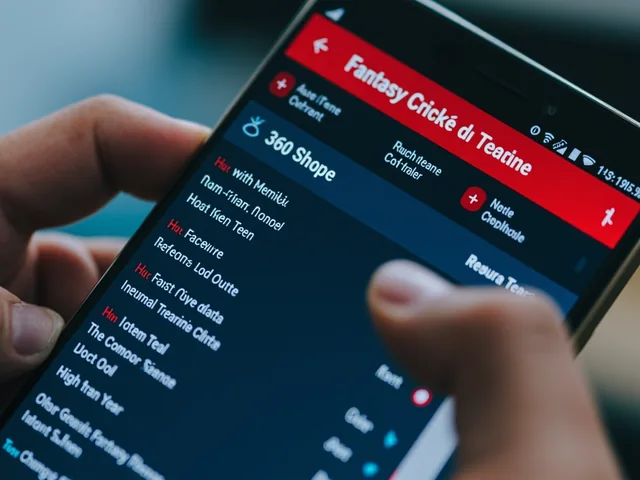
The four-bucket framework is the cleanest way to think about CricExperts 100-credit team building. Bucket one is the 4 premium picks at 10.0-11.0 credits each — typically your captain, vice-captain, the in-form opener, and one marquee all-rounder. These four players eat 40-44 credits and account for 50-60% of your projected points. Bucket two is 4 mid-tier picks at 8.5-9.5 credits — the role-fillers and second-tier all-rounders who round out the squad. These four eat 34-38 credits. Bucket three is 2 differential picks at 7.5-8.5 credits — the high-variance players under 18% ownership who can lift a contest leaderboard by 30-50 points if they fire. Bucket four is 1 punter pick at 7.0-7.5 credits — the wildcard, typically a player making a comeback or an uncapped domestic player with limited T20 track record.
Add up the four buckets: 40-44 + 34-38 + 15-17 + 7-7.5 = 96.0-106.5 credits, with the upper end already overshooting. The discipline is to pick exactly at the lower edge of each bucket — 10.0 credits instead of 11.0 for one premium, 8.5 instead of 9.5 for one mid — so the squad lands at 97-99 credits and leaves 1-3 credits of slack for an in-app swap before the toss. Anyone running the math on 4 premium at the 11.0 ceiling will hit the cap at 105-106 credits and have to drop a player, which almost always means dropping a differential pick and replacing it with another mid-tier filler — the exact opposite of what wins contests on CricExperts in IPL 2026.
The CricExperts captain armband carries a 2x multiplier on the base points scored by the player wearing it, with an extra 1.2x differential bonus when the captain pick is under 18% ownership (the 2.4x combined ceiling). The dual-role rule for the 100-credit framework is simple: pick one premium player for the captain armband (Bumrah, Rashid, an in-form top-3 batsman at 10.5-11.0 credits) AND pick one differential player as the vice-captain at 1.5x multiplier (a 7.5-8.5 credit player under 12% ownership). The combination stacks the safe captain ceiling with a high-variance vice-captain swing.
The mistake most casual CricExperts players make is picking two premium picks as captain and vice-captain — both at 10.5+ credits. That burns 21+ credits on two players and leaves the differential bonus on the table. The right play is captain premium (10.5-11.0) + vice-captain differential (7.5-8.5) = 18-19.5 credits on the armband slots, leaving 4-5 extra credits for the differential bucket. In a typical IPL 2026 match, the captain armband returns 60-90 effective points on the premium pick, and the vice-captain armband returns 25-50 effective points on the differential pick when the differential fires — the same armband credits, but with 30-50% more upside than the all-premium approach.

The all-rounder banker ladder is the structural heart of the 100-credit framework, and the three tiers behave very differently on CricExperts in 2026. The 9.0 credit tier is the value bucket — Sunil Narine in his finisher role, Andre Russell in the back end of an innings, Axar Patel at his batting ceiling. These players score 35-50 base points in a typical IPL match and the credit cost is 1.0-1.5 less than the equivalent all-format banker tier. The 9.5 credit tier is the balanced bucket — Hardik Pandya, Glenn Maxwell, Ravindra Jadeja. These players score 45-60 base points and are the safest vice-captain picks on the platform.
The 10.0 credit tier is the ceiling bucket — Marcus Stoinis at peak form, Sunil Narine when he is bowling 4 overs and batting at 3, Liam Livingstone in English conditions. These players score 55-75 base points but eat credits that could fund an extra differential. The optimal play is to pick ONE player from each tier — one 9.0 value pick for the role-filler rotation, one 9.5 balanced pick for the captain-armband slot, and skip the 10.0 tier entirely unless you have 3+ credits of slack after the rest of the squad is built. CricExperts contests in IPL 2026 reward depth over ceiling, and the 9.0 + 9.5 banker ladder gives you the depth without burning the differential budget.
The 100-credit cap interacts with the 4-overseas-player rule (in IPL, each team can only field 4 overseas players, but on CricExperts the squad can carry up to 4 overseas players as long as they are fielded within the 4-overseas match limit). The overseas quota trap is structural: stacking 4 overseas premium picks at 10.5+ credits each costs 42-44 credits out of the 100-cap and leaves 56-58 credits for 7 Indian players, which means 3 Indian players at 9.0-9.5 credits and 4 Indian players at 7.0-8.5 credits. That 4-premium-overseas structure looks balanced on paper but it actually sacrifices 8-12 credits of Indian mid-tier depth — the very credits that fund the differential bucket.
The 3-credit loss from overseas-stacking adds up over a 14-match IPL 2026 season. Across 14 squads, that 3-credit loss translates to 42 credits of foregone Indian mid-tier allocation, which is roughly 4-5 differential picks that never get onto your team. The optimal overseas quota is 3 — one premium overseas captain (10.5-11.0), one mid-tier overseas all-rounder (9.0-9.5), and one differential overseas punter (7.5-8.5) = 27-29 credits. The remaining 4 slots go to Indian players at 9.0, 9.0, 8.5, 8.0 credits = 34.5 credits on the Indian side. Total squad: 27-29 + 34.5 + ~38 in the differential bucket = 99.5-101.5 credits, which fits the 100 cap with 1-2 credits of slack for in-app swap.

The bowling-unit allocation is a 4-credit decision that most CricExperts players overlook. The two viable structures are 3 specialist bowlers (each at 9.0-10.5 credits) + 1 part-time bowler from the all-rounder or batsman bucket (8.5-9.5 credits) = 36-40 credits on the bowling unit, OR 4 specialist bowlers (one at 10.5 premium + three at 8.5-9.5 mid-tier) = 35.5-39 credits. The 3-specialist-plus-1-part-time structure is the higher-EV configuration on CricExperts in IPL 2026 because the part-time bowler typically scores 25-40 base points from batting alone plus 8-15 from 1-2 overs of bowling, while the dedicated 4th specialist bowler scores 30-50 base points but eats credits that could fund a differential pick.
The key exception to the 3+1 rule is matches where the opponent is a batting-heavy lineup with 7-8 specialist batsmen — in those matches, the 4-specialist configuration captures 8-12 extra bowling points from the extra over that a part-time bowler would not bowl. For most IPL 2026 matches, the 3+1 structure is the higher-EV configuration. CricExperts teams that run 4 specialist bowlers in low-scoring Wankhede or Chepauk tracks gain a marginal advantage; teams that run 4 specialist bowlers in high-scoring Chinnaswamy or Eden Gardens tracks lose 12-18 points on average from the absence of a batting differential in the 4th slot.
The CricExperts late-swap window closes 10 minutes before the first ball of the match, and free-tier users get 2 swaps per match. The right way to use the 2 swaps for 100-credit team building is to lock the squad at the toss with one of two configurations: (a) confirm the playing-11 of both teams via the official IPL app, then check the CricExperts projected points for each player in your squad, then use the 2 swaps to swap the 2 lowest-projected players for the 2 highest-projected bench players — even if the swap costs you 0.5-1.0 credits and forces a captain-armband reshuffle, the projected-points gain is worth 8-15 points per swap.
The trap to avoid is the late-swap-driven-by-Twitter-rumour. CricExperts users frequently see a "playing 11 confirmed" tweet 20 minutes before the toss, swap their squad based on the rumour, and find out the rumour was wrong 30 minutes after the toss when the actual playing 11 is announced. The discipline is to wait for the official toss announcement (which happens 30 minutes before the first ball on the IPL broadcast), confirm both teams' playing 11, and only then make the swap. CricExperts users who follow the late-swap discipline consistently score 5-12 points higher per match than users who chase Twitter rumours, and over a 14-match IPL 2026 season that adds up to 70-170 leaderboard points — a real difference between top-quartile and top-5% finishes.
The cleanest role-by-role credit allocation on CricExperts in IPL 2026 is: wicketkeeper 8.5-9.5 credits, batsmen 9.0-10.5 credits each (3 picks), all-rounders 9.0-9.5 credits each (2 picks), bowlers 9.0-10.5 credits each (3 picks) + 1 part-time bowler 8.5 credits from the all-rounder bucket = 96-99 total. This leaves 1-3 credits of slack for the late-swap window without overshooting the cap. Avoid 11.0-credit picks unless the player is genuinely a top-3 captaincy candidate — the 0.5-1.0 credit difference rarely justifies the cap pressure.
The optimal captain pick for the 100 credit squad is one premium player at 10.5-11.0 credits with under 18% projected ownership, ideally a death-over bowler or a top-order batsman playing in conditions that favour their skill profile (e.g. a yorker specialist on a slower Wankhede track, an in-form opener on a flat Chinnaswamy surface). The CricExperts 2x captain multiplier stacks with the 1.2x differential bonus for a combined 2.4x ceiling on differential captain picks, which is the single highest-EV slot on the platform.
The optimal overseas count is 3 on CricExperts in IPL 2026 for most contests — one premium overseas captain (10.5-11.0), one mid-tier overseas all-rounder (9.0-9.5), and one differential overseas punter (7.5-8.5). The 4-overseas structure burns 42-44 credits out of the 100 cap and sacrifices 8-12 credits of Indian mid-tier depth that would otherwise fund the differential bucket. The 4-overseas configuration only wins in matches where the opponent's batting lineup is heavy on Indian specialist batsmen and your 4th overseas bowler is a clear upgrade over any available Indian bowling option.
The CricExperts differential bonus awards 1.2x on top of the base captain multiplier (2x) when the captain pick is selected by fewer than 18% of teams in a contest — a combined 2.4x ceiling. The bonus is independent of the credit cost, so a 7.5-credit differential pick at sub-18% ownership as captain returns the same 2.4x multiplier as an 11.0-credit premium pick at sub-18% ownership. The optimal 100-credit framework allocates 1 premium captain (10.5-11.0) and 1 differential vice-captain (7.5-8.5) to capture both the safe captain ceiling and the differential bonus on a separate armband slot.
If your squad lands at exactly 100.0 credits on CricExperts, you have no slack for the late-swap window. The right move is to drop one mid-tier pick by 0.5 credits (typically an all-rounder or a part-time bowler) to land at 99.5 credits, leaving 0.5 credits of slack for an in-app swap if a player's projection moves between squad lock and the toss. A squad at exactly 100.0 credits cannot absorb any swap without dropping another player, which is a structural disadvantage over a 14-match IPL season where every contest has 1-2 late news-driven swap opportunities.
For more side-by-side breakdowns on fantasy cricket strategy, see our full CricExperts fantasy cricket archive — including captain-pick deep-dives, wicketkeeper selection math, differential ownership tables and bonus-code comparators that update every IPL match week.
